
Joint and Sustained Efforts Towards Media Literacy
Published: Jan 22, 2026 Reading time: 4 minutes Share: Share an articleOur efforts to strengthen media literacy require daily and coordinated engagement from civil society organisations, state, and educational institutions, as well as from individuals, through a willingness to pursue self-directed and lifelong learning. In a time of rapid technological development, the volume of information and the risks of manipulation are increasing exponentially, thus the need for media literacy is critical.
To ensure that our work is effective and sustainable, we collaborate with a wide range of stakeholders on the media literacy pathway. We connect our long-standing experience with continuous processes aimed at capacity exchange and strengthening of local partners in Armenia.
About the Project
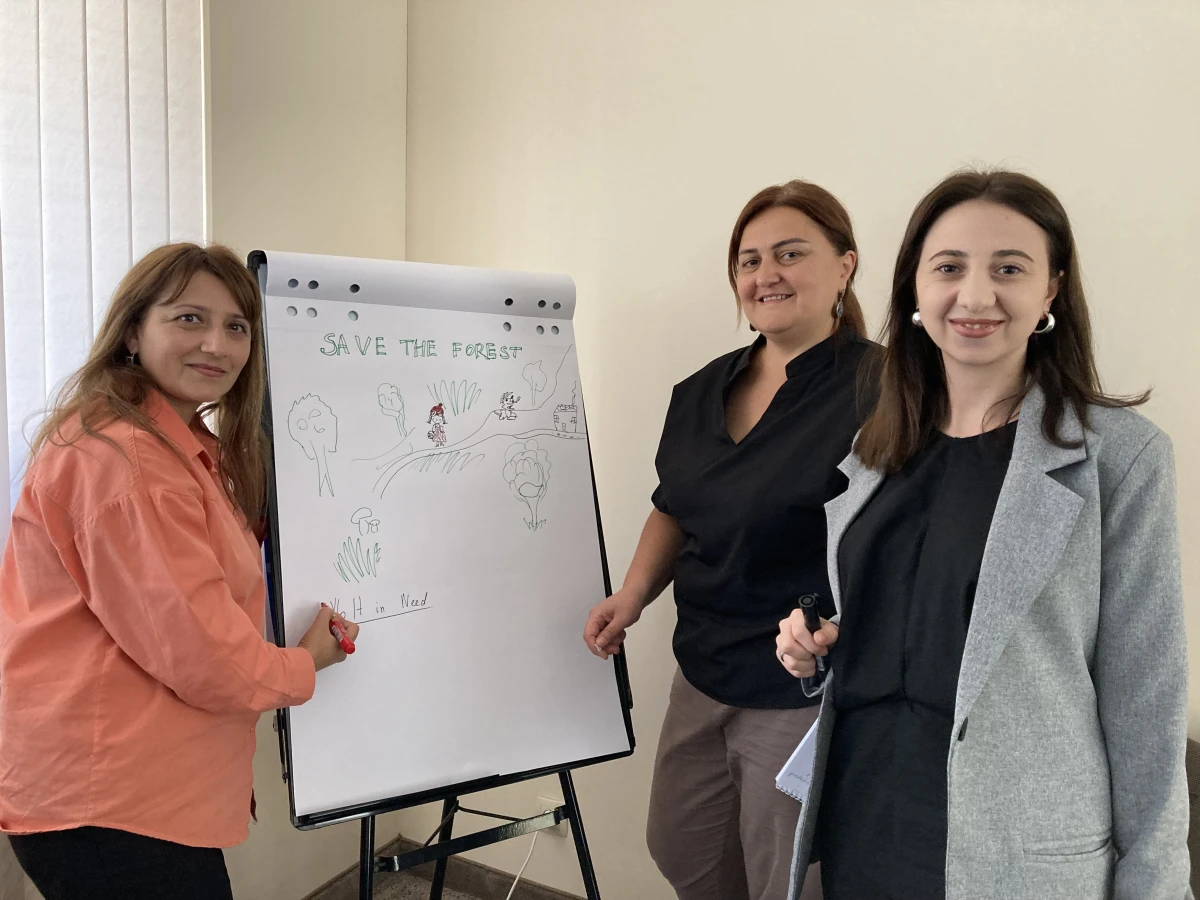
Within the framework of the “Advancing Media Literacy through Civil Society Actors in Armenia” project, implemented with the financial support of the Ministry of Foreign Affairs of the Czech Republic, we went beyond the project scope and worked with 19 local civil society organisations. The project offered a comprehensive training on media literacy fundamentals, artificial intelligence, strategic communication, monitoring and evaluation, proposal writing, and networking events.
These partnerships contributed not only to strengthening organisational capacities, but also to fostering cooperation among CSOs, facilitating the exchange of ideas and joint brainstorming, and building an environment based on trust and partnership.
Sub-grants and community-level impact
Within the framework of the project, sub-grants were awarded to KAMQ, HEBA, and the Association of Young Journalists to implement media literacy initiatives in Lori region. The three organisations delivered a series of media literacy training sessions in their communities, complemented by a range of accompanying activities, including documentary film screenings and discussions using the One World in Schools (OWIS) methodology.
In particular, KAMQ Youth Programmes NGO engaged community members in the development and release of a series of explanatory videos on media literacy, while HEBA developed an educational board game, Media Lotto, designed to present media literacy topics in an interactive and accessible way for different age groups.
Overall, training sessions implemented under these three sub-grant projects engaged more than 300 participants from Lori region. Participants included young people, women, housekeepers, teachers and older adults. Particular emphasis was placed on digital safety and media hygiene, including protecting social media accounts, using tools to verify information, understanding the risks of sharing sensationalist and misleading content, and developing a critical approach towards dubious “miracle cures” actively promoted on social media platforms.
According to Project Manager Shushanik Nersesyan, ensuring long-term impact requires media literacy initiatives to address behavioural change. “Our goal is for people to develop sustainable habits such as verifying information sources, refraining from spreading disinformation, and contributing through their own example to a healthier media environment within their communities.”
Ruzanna, a project participant, noted that the knowledge gained through the project is applicable to both her own media use and within her family. She often discusses both the positive and negative aspects of social media with her grandmother, helping her understand how to reduce harmful influences and rely on trustworthy information.
The One World in Schools (OWIS) methodology
One of the key components of the project was the application of PIN’s One World in Schools (OWIS) educational methodology. OWIS combines the development of critical thinking with civic engagement through the screening and discussion of documentary films. The OWIS methodology supports conscious media consumption and the formation of active civic attitudes among both young people and adults.
OWIS was developed in 2001 as an educational extension of the One World Human Rights Documentary Film Festival and has since been implemented by PIN in 14 countries worldwide. In the Czech Republic alone, more than 4,000 primary and secondary schools successfully apply the methodology.

Beyond classroom-based learning, OWIS includes a range of integrated initiatives such as OWIS film clubs, youth-led community projects, student community leadership awards, civic journalism programmes, and mock elections.
Detailed information about OWIS is available at: www.jsns.cz.
Film screening rights and sustainability
The project’s sub-grantee organisations—KAMQ, HEBA, and the Association of Young Journalists—hold screening rights for three documentary films: “Gabriel Reports on WFC”, “Trust Me”, and “What Makes You Click”. The screening rights are valid until 2029, with the last film licensed until 2027, enabling continued media literacy activities beyond the programme’s completion.
Our evidence-based approach
With the aim of supporting effective consolidation of the CSO sector and making interventions more selective, the project also included a study on CSO Communication and Trust Narratives. The study combined findings from discussions and surveys conducted in Lori, Shirak and Syunik regions, exploring how CSOs perceive their own role and how this perception is reflected—and at times reinterpreted—by other actors within the local ecosystem. These include local self-government bodies, regional state authorities, social services, the private sector, media, academic and expert communities, as well as community members, including vulnerable groups.
The study goes beyond collecting opinions, identifying systemic patterns, strengths and weaknesses, gaps in cooperation mechanisms, and the underlying structures of “trust architecture” within communities, ultimately offering practical recommendations for CSOs.
Media Literacy


