
From assistance to self-reliance: Building a farm from scratch
Published: May 29, 2026 Reading time: 4 minutes Share: Share an articleAfter the displacement from Nagorno-Karabakh in 2023, Mher’s family, like thousands of others, had to start over from nothing. Today, in Armenia’s Ararat region, they cultivate 14 hectares of land and are gradually expanding their farm.
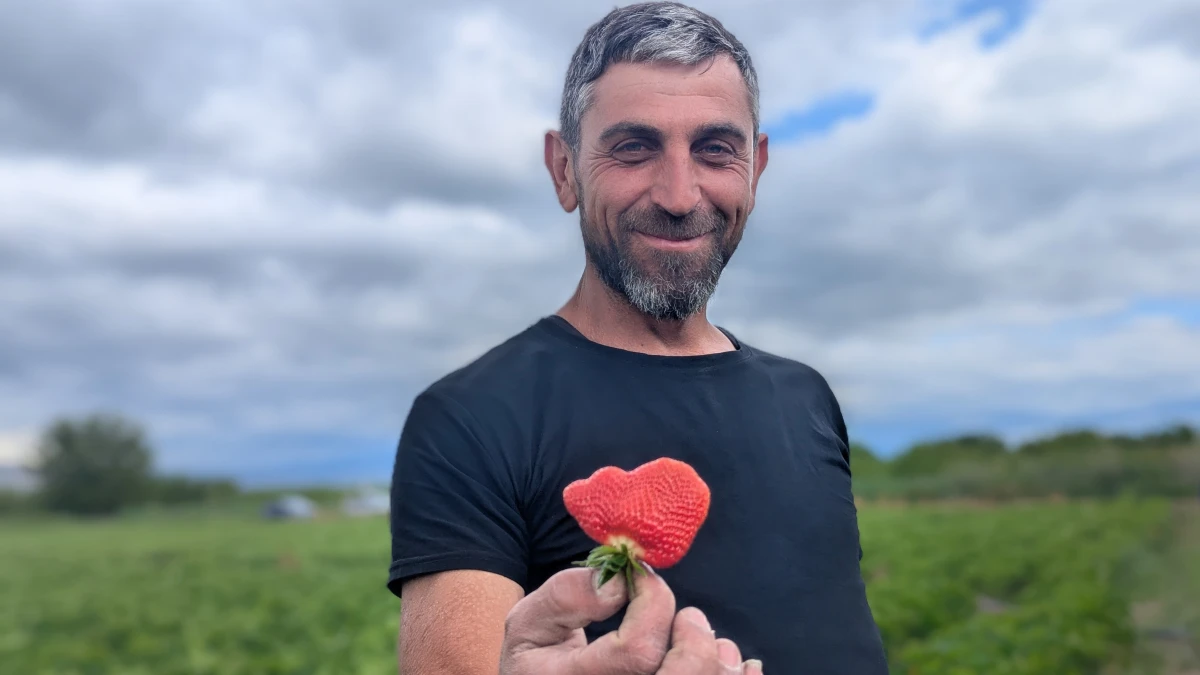
Mher moved with his wife, two children and father from Stepanakert in Nagorno-Karabakh to Byuravan, a village in Armenia’s Ararat region. Although the family tried to bring their truck from Nagorno-Karabakh, it broke down and they were forced to abandon it on the road.
Last year, to secure an income, the family rented two hectares of land and grew watermelons. The harvest was a great boost to the family’s confidence. This year, with support through the provision of a motor cultivator, the family rented 14 hectares of land and began growing strawberries, watermelons, melons, and tomatoes.
Mher


The motor cultivator has made farming easier and cost-effective. The family can now reduce labour and equipment-rental costs and invest those savings into expanding their farm.
“This year we have already completed our first strawberry harvest and sold around 200 crates,” says Mher. According to him, all family members are involved in the work, including his school-aged son and daughter, who help in the fields.
“Thanks to this equipment, we can reduce costs and manage our resources more effectively. We still need additional machinery, but step by step we are advancing and setting new goals,” he says.
For another displaced family, agriculture has also become a stable source of income. Tatul’s energy and commitment to his work are visible from the moment you enter the family’s yard. There are more than 100 chickens, chicks and ducklings, while in the small garden. Tatul grows trees, plants crops and harvests produce. He tries to use everything as efficiently as possible, even turning damaged tree branches into support for other crops.

Nevertheless, challenges remain; recently, dogs attacked and killed around 80 of the family’s chickens. Despite this, Tatul continues working to support his family’s wellbeing.
“We lived in Avetaranots in Karabakh; I worked in agriculture. In a village, you need to have land and livestock,” says Tatul. After the displacement, the family chose rural life once again and settled in Aygezard in the Ararat region. “This village is very close to my heart,” Tatul says. He adds with a smile that neighbours are often surprised by the practical solutions he finds while working on the land.
Tatul lives with his wife, three children, and mother. His youngest son, Daniel, is two years old and was born in Armenia. His two daughters attend school and also enjoy going to dance classes on weekends.
“There are other families from Artsakh in the community as well. There is a strong connection between us,” says Tatul. “Sometimes we gather in the evenings, talk and remember the old days.”
With our support, Tatul’s family received 100 chicks and poultry feed, helping them expand their farm. The family now sells eggs in the village to earn additional income.
“We have already received the child benefit payments,” says Tatul. “We will use that money to buy more chickens.”
At the moment, Tatul’s biggest goal is to buy land in the village and build a house, so he can continue farming and create a stable future for his family.
Tatul


To strengthen the resilience and self-reliance of families displaced from Nagorno-Karabakh and the host communities supporting them, we are implementing a recovery project in the Ararat region in cooperation with Mission Armenia NGO and with support from the Ministry of Foreign Affairs of the Czech Republic.
Through the project, 200 displaced and host community families have received support to meet urgent needs and restore long-term stability. Assistance includes food and non-food items, work equipment, employment and vocational training opportunities, as well as mental health and psychosocial support services.
Families participating in this project were selected through home visits and vulnerability assessments, with priority given to large families, single-parent households, older people, people living with disabilities or chronic health conditions, and families without a stable source of income.


